GoSwim
@@goswim
@@goswim

February 25, 2026 • 1:16
Elite Swimming Secret: Master Underwater Speed! #shorts
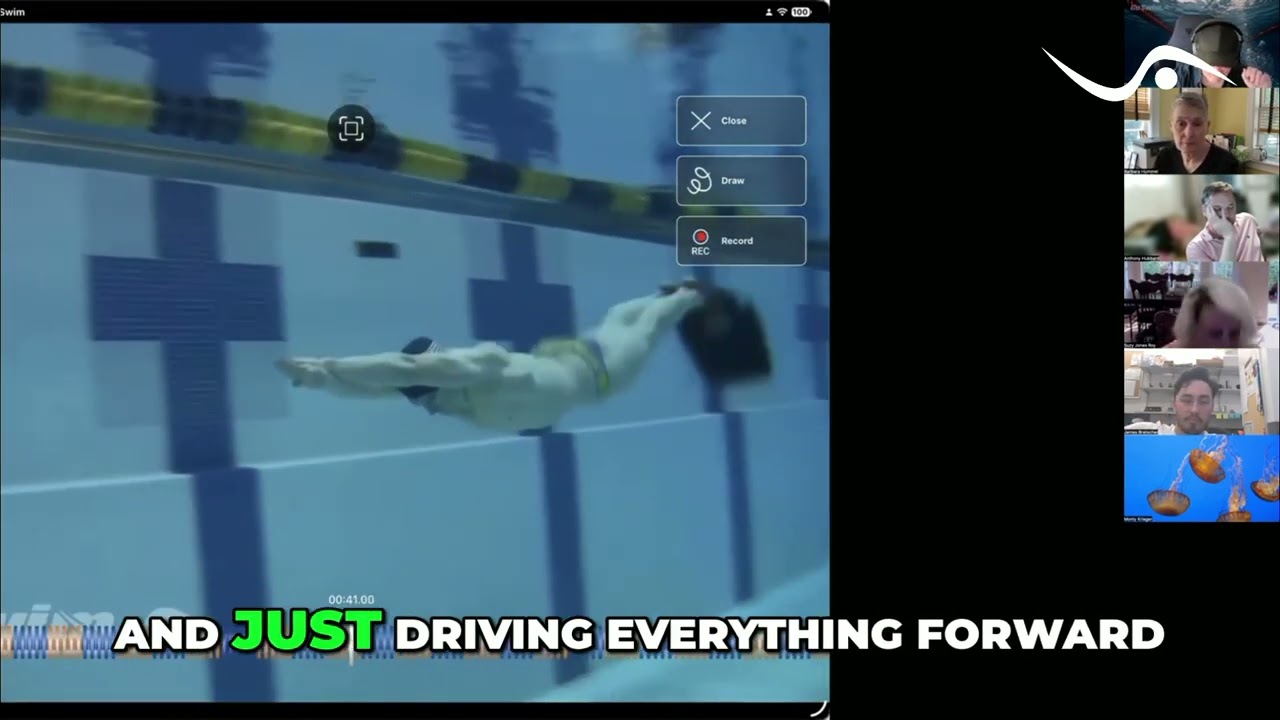
Data reveals the crucial difference in elite swimming: underwater performance. National teams dominate by maximizing underwater distance off starts and turns, showcasing its impact on overall speed. #Swimming #EliteSwimming #UnderwaterTechnique #SwimData

February 24, 2026 • 0:57
GoSwim FREE App: Unlock Swimming Performance Data! #shorts
Unlock GoSwim's full features FREE for 4-5 weeks! Parents & coaches, understand crucial swim metrics like distance per cycle & tempo. Share with friends! #GoSwim #Swimming #SwimTraining #FreeApp www.goswim.tv/championship

February 24, 2026 • 3:18
The 15-meter underwater rule explained — and why your breakout distance data might be telling you more than you think. In this video, Glenn Mills digs into one of the most critical and often misunderstood data points in the Go Swim app: breakout distance and the 15-meter underwater rule. Using real race footage from elite-level backstroke swimmers, Glenn walks through exactly what the data means and how to interpret it correctly. A few key things every swimmer and coach needs to know: the 15-meter rule requires any part of the swimmer's head — including the chin — to break the surface before the 15-meter mark. It's not the tip of the head, it's any part of the head. That distinction matters, and it came straight from a meeting with a lead official from USA Swimming. There's also a critical detail about yards vs. meters that trips up a lot of coaches. The 15-meter markers in the app are always set in meters — even if you're swimming in a yards pool. So if your data shows a breakout distance of 15.5, don't panic. In a yards pool, that's still legal. Know your units. Most importantly — watch the elite swimmers in this video. Every single one of them is still fully underwater at the point where many age groupers have already started stroking. That's the standard. That's what's possible. Where are you right now, and how much runway do you have to improve? 🏊 New to the Go Swim app? Check out our full Import & Add Data tutorial to get started. 🏊 Subscribe for more Go Swim app tutorials, swimming tips, and coaching insights. #GoSwim #SwimCoach #SwimmingApp #UnderwaterDolphin #BreakoutDistance #15MeterRule #RaceAnalysis #SwimData #SwimmingTips #SwimFast

February 24, 2026 • 4:35
What does Distance Per Cycle actually look like in real race data — and what does it mean for your swimmer's development? In this video, Glenn Mills dives deeper into one of the most important metrics in the Go Swim app: Distance Per Cycle. Using a real 100 backstroke race as a live example, Glenn breaks down exactly what a stroke cycle looks like on video, how the app measures it, and what that number tells you about how efficiently a swimmer is moving through the water. In this particular race, the swimmer is covering 2.61 yards per stroke cycle — a remarkable number for an elite-level backstroker on track to score at Division I NCAAs. But the most important takeaway isn't the number itself — it's what you do with it. Don't compare your swimmer to elite athletes. Compare them to themselves. Every swimmer is a different size, at a different point in their physical development, and bringing different strengths to the water. The goal isn't to match someone else's DPC — it's to understand where your swimmer is today and track their progress over time. For a still-growing athlete, this year's numbers could look very different from next year's as strength and leverage naturally improve. Know where you are. Know where you want to go. That's what Distance Per Cycle data is all about. 🏊 New to the Go Swim app? Check out our full Import & Add Data tutorial to get started. 🏊 Subscribe for more Go Swim app tutorials, swimming tips, and coaching insights. #GoSwim #DistancePerCycle #SwimCoach #SwimmingApp #RaceAnalysis #SwimData #BackstrokeSwimming #SwimmingTips #LongTermAthleteDevelopment #SwimFast Related Videos Setting the 15-Meter Mark Setting the 15-Meter Mark Intro to Swimming Math Intro to Swimming Math Social Post Welcome Social Post Welcome Understanding Distance Per Cycle Understanding Distance Per Cycle Understanding Tempo Understanding Tempo FEATURES Groups Courses Lessons Invite Guide SUBSCRIPTION Athlete Coach

February 24, 2026 • 3:46
Adding Freestyle & Backstroke Data
Freestyle and backstroke data collection works a little differently in the Go Swim app — here's exactly what to do. In this tutorial, Glenn Mills walks through how to add race data for freestyle and backstroke events in the Go Swim app, and explains the key difference from breaststroke and butterfly: stroke cycle tracking. For breaststroke and butterfly, both arms move together, so every stroke counts as one cycle. For freestyle and backstroke, you track one hand at a time — whichever hand hits first off the start or turn is the one you follow for that length. It may switch from lap to lap, but the rule stays the same: tag the first hand, and track it consistently throughout. Using a 100 backstroke as a live example, Glenn demonstrates the full Pro Data workflow — finding the strobe for an accurate start, tracking strokes and turns in real time, finalizing the data, then refining the 15-meter marks and underwater velocity breakout points for each lap. Once you understand the one-hand-per-cycle rule, freestyle and backstroke data collection is just as fast and straightforward as any other stroke. 🏊 New to the Go Swim app? Check out our full Import & Add Data tutorial to get started. 🏊 Subscribe for more Go Swim app tutorials, swimming tips, and coaching insights. #GoSwim #SwimCoach #SwimmingApp #RaceAnalysis #BackstrokeSwimming #FreestyleSwimming #SwimData #SwimmingTips #SwimFast #AgeGroupSwimming

February 24, 2026 • 2:46
How fast can you actually collect full Pro Data from a race video? Watch it happen in real time. Skip the lengthy explanation — this video shows just how quick and efficient the Go Swim app data entry process really is. Using the same 100 breaststroke race from the previous tutorial, Glenn Mills runs through the entire workflow on iPad in Pro Data mode: tracking strokes and turns live, finalizing the data, setting the 15-meter marks for each lap, and dialing in underwater velocity — all in just a couple of minutes. Once you've done it a few times, it becomes second nature. Whether you're watching a race live at the meet or reviewing imported footage at home, the process is the same — and it's fast. A complete Pro Data set including 15-meter splits, underwater velocity, tempo, distance per cycle, and lap times, all ready to go before you've had time to put your phone away. This is the follow-up to our full Import & Add Data tutorial. If you haven't seen that one yet, check it out first for the step-by-step breakdown. 🏊 Subscribe for more Go Swim app tutorials, swimming tips, and coaching insights. #GoSwim #SwimCoach #SwimmingApp #RaceAnalysis #SwimData #ProData #SwimmingTips #SwimFast #AgeGroupSwimming #SwimTech

February 24, 2026 • 8:00
Learn how to import any race video into the Go Swim app and collect accurate stroke data in just a few minutes — step by step. In this tutorial, Glenn Mills walks you through the complete process of importing a video into the Go Swim app on iPad and adding race data from start to finish. Whether it's a race you filmed at a meet or an older underwater video saved in your photo library, getting it into the app is straightforward — and the data it produces is incredibly powerful. In this video you'll learn how to import a video from your photo library into the Go Swim app, how to set the aspect ratio for a full-screen view, how to sync the race start using the strobe or best available frame, how to track strokes, turns, and the finish in real time as the race plays, and how to finalize your data and switch between Basic and Pro data modes. In Basic Data mode, the app instantly calculates breakout distance, breakout split, stroke cycles, tempo, distance per cycle, swim velocity, turn time, and lap time. Switching to Pro Data mode adds precise 15-meter splits and more accurate underwater velocity, calculated by scrubbing to the exact frame where the swimmer's head breaks the surface. Once your data is ready, tap the score button in the bottom left corner and the app connects back to Go Swim to recommend specific videos your athlete can watch to address exactly what the data revealed — turning numbers into a clear action plan for improvement. 🏊 Subscribe for more Go Swim app tutorials, swimming tips, and coaching insights. #GoSwim #SwimCoach #SwimmingApp #RaceAnalysis #SwimData #SwimmingTips #AgeGroupSwimming #SwimFast #TempoTrainer #SwimTech

February 24, 2026 • 3:09
In the first two videos, we talked about Length (Distance Per Cycle) and Tempo (Stroke Rate). Now we get to the most important question: How does Distance Per Cycle actually improve? This is where anxiety often shows up. Do we push harder? Do we add more work? Do we force speed? The answer is no. Distance Per Cycle improves through skill, attention, and time. It’s not something you muscle into existence. It’s the byproduct of: • Better body position • Better timing • Better interaction with the water And those things are learned. 1️⃣ Count Strokes The first step is simple: count your strokes. When swimmers count, they become aware. They learn the difference between moving water… and spinning their arms. Stroke counting turns swimming from guessing into understanding. This is where data matters — knowing what a strong stroke count is, and what needs improvement. 2️⃣ “Shorten the Pool” Better streamlines. Longer underwaters. More intentional breakouts. Every yard or meter traveled underwater is distance gained without stroking. That’s free speed. Underwaters are a long-term skill. Every elite swimmer has them. The earlier they’re developed, the greater the advantage over time. 3️⃣ Growth Multiplies Skill Swimmers don’t control growth — but they benefit from it. As limbs lengthen and natural strength increases, leverage improves. If skill is already in place, growth multiplies its effect. That’s why focusing on Distance Per Cycle early is so powerful. You’re preparing your swimmer for who they are becoming. Watch elite swimmers: Long body lines. Patient strokes. Long underwaters. Clean breakouts. Effort that looks controlled — not frantic. None of this is instinct. It’s learned. Swimming is simple math: Distance first. Tempo second. When Distance Per Cycle improves: • Progress becomes predictable • Training becomes intentional • Speed becomes sustainable The sooner a swimmer learns how to work the math, the better their chances of reaching their potential. Download the GoSwim app and start learning the math. We’re giving complimentary access through the end of March. Join us. We’ll walk with you every step of the journey. #SwimmingIsMath #GoSwim #DistancePerCycle #SwimDevelopment

February 24, 2026 • 2:26
In our first video, we talked about Length — Distance Per Cycle. How far a swimmer travels with each complete stroke. Now we move to the second part of Swimming Math: Tempo. When we talk about tempo, we’re asking one simple question: Is it faster… or slower? Most swimmers think going faster means moving the arms faster. That instinct makes sense — on land, more effort usually equals more speed. But water doesn’t reward effort alone. When tempo increases without protecting Distance Per Cycle, strokes get shorter. Shorter strokes create more resistance. More resistance cancels speed. This is swimming’s most common trap: Swimmers feel exhausted… but they’re not actually moving faster. Speed in swimming is simple math. If Tempo goes up but Distance Per Cycle goes down — the math doesn’t improve. Water doesn’t care how hard you try. It only responds to shape, alignment, timing, and efficiency. Tempo is not the enemy. Tempo is powerful — when it’s applied at the right time. Efficiency first. Speed second. One of the best ways to train this: • Learn your current tempo. • Learn your current Distance Per Cycle. • Hold the same tempo. • Gradually improve Distance Per Cycle. When tempo increases naturally — and safely — speed follows. Tempo isn’t the problem. Misunderstood tempo is. In the final video, we’ll show how Distance Per Cycle improves without forcing it, without guessing — and in a way that fits a swimmer’s long-term development. #SwimmingIsMath #GoSwim #Tempo #DistancePerCycle

February 24, 2026 • 2:28
Understanding Distance Per Cycle
Understanding Distance Per Cycle Swimming looks simple: get in the water and go faster. But swimming isn’t instinct—and going faster in the water doesn’t work the way most people think it does. Swimming is math. And the first piece of that math is length. When we talk about length in swimming, we’re always asking one simple question: Is it longer or shorter? That might mean: the length of the race the length of the push-off or the length of time spent underwater But today, we’re focusing on the most important length of all: Distance Per Cycle. Distance per cycle is the completion of one full stroke cycle. In freestyle and backstroke, that’s the right arm and the left arm. In butterfly and breaststroke, both arms move together. Distance per cycle is simply how far your body travels during that stroke cycle—and it’s one of the most important things a swimmer can understand. Distance per cycle is not about effort. It’s about skill. It reflects how well the body is balanced in the water, how aligned the swimmer is, and how cleanly they move through the water. This is the magic of swimming. Two swimmers can take the same number of strokes at the same tempo and move at very different speeds. The difference is distance per cycle. Here’s the problem: distance per cycle is the last thing humans understand about swimming fast. When young swimmers are told to go faster, they do the one thing that makes sense—move their arms faster. That instinct works on land, but water doesn’t reward effort. Water punishes resistance. When a swimmer shortens their stroke, loses their body line, and starts to thrash, they create more resistance—and resistance is the enemy of speed. Without realizing it, they’re working harder just to go the same speed… or slower. Great swimming doesn’t start with speed. It starts with length. Longer body lines. More distance per cycle. Less resistance through the water. This is the science of how the body moves through the water—and it has to be learned. Before we ever ask a swimmer to move faster, we have to teach them how to move farther with each stroke. In the next video, we’ll talk about the second part of swimming math: tempo—and why increasing tempo without understanding distance is where most swimmers get stuck.