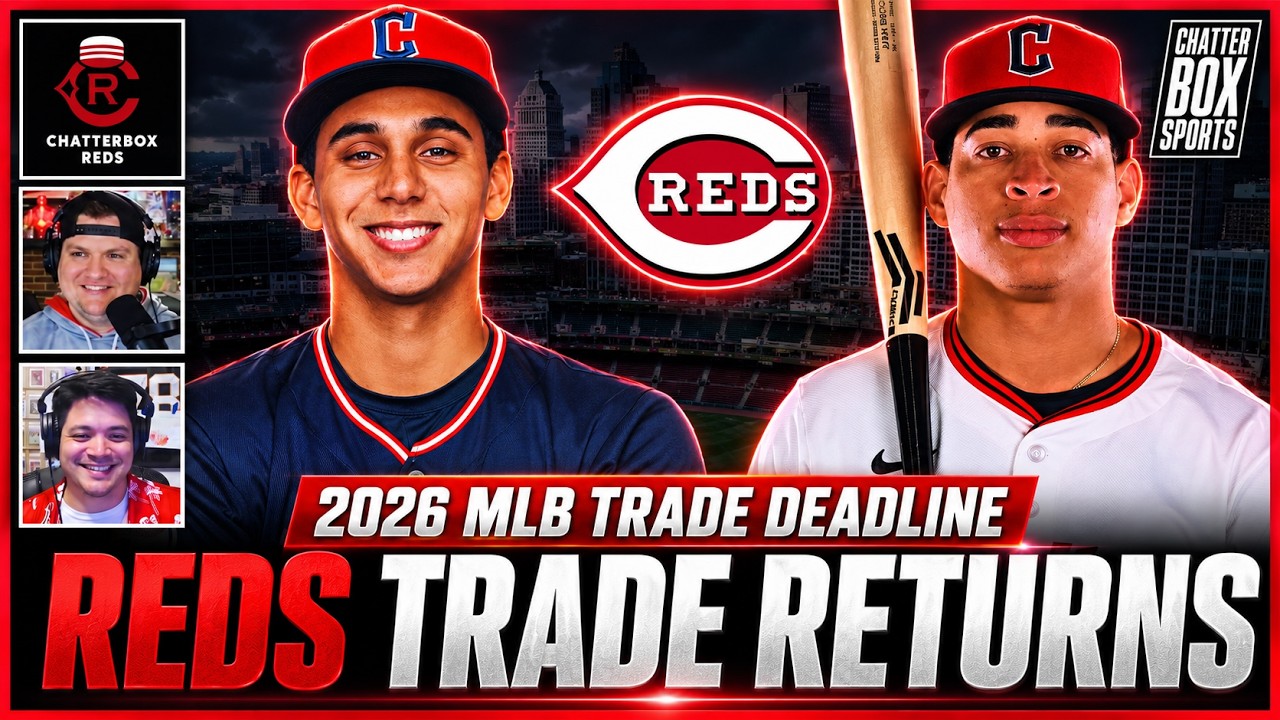
Nick Kirby and Mike Hart discuss the Cincinnati Reds two trade deadline acquisitions from the Cleveland Guardians: Juan Brito and Alejandro Rivera. They also explain why the Reds traded Caleb Ferguson to the St. Louis Cardinals for international draft pool money.
-------------------------
The Cincinnati Reds entered the 2026 MLB Trade Deadline in one of the most difficult positions in baseball. At 53-58 and sitting in last place in the National League Central, Cincinnati was far enough out of contention that selling made sense, but not so far removed from the Wild Card race that a complete teardown was necessary. Instead of taking a firm direction, the Reds chose the middle ground—a strategy that has become all too familiar for fans.
When the dust settled Monday evening, Cincinnati had made only a handful of moves. The biggest deal saw the Reds trade veteran first baseman Nathaniel Lowe to the Cleveland Guardians in exchange for 19-year-old pitching prospect Alejandro Rivera. They also moved left-handed reliever Caleb Ferguson while acquiring international bonus pool money. Those were sensible transactions that added future value without significantly impacting the organization's long-term plans.
The bigger story, however, wasn't who the Reds traded. It was who they didn't.
Tyler Stephenson remained in Cincinnati despite being one of the better offensive catchers available on the market. Brady Singer, who generated interest from multiple clubs, was also held onto. Veterans like Brock Burke and several other pending free agents stayed put as well. Considering Cincinnati's place in the standings and the number of contenders looking for pitching and catching help, many expected the Reds to capitalize on a strong seller's market.
Instead, the front office once again appeared hesitant to fully commit to a direction.
For president of baseball operations Nick Krall, this deadline will likely be remembered more for missed opportunities than completed deals. Selling doesn't always mean giving up on a season. It means recognizing where your club stands and maximizing value for players who may not be part of the next winning team. Cincinnati had several veterans whose value may never be higher than it was this week.
Stephenson, for example, has been one of baseball's hottest hitters since Father's Day and would have immediately improved several playoff contenders behind the plate. Singer had pitched well enough to become one of the more attractive starting pitchers available. Both players could have returned prospects capable of helping the Reds in 2027 and beyond.
Instead, Cincinnati chose to keep them.
Perhaps the Reds believe they can extend Stephenson. Maybe they expect Singer to remain part of the rotation moving forward. Those are fair arguments, but until those extensions actually happen, the organization assumes considerable risk. If either player departs in free agency or sees his value decline over the final two months, this deadline will look even more disappointing in hindsight.
There is also the question of organizational messaging.
The Reds weren't buyers. They weren't aggressive sellers. They simply occupied the middle ground. That approach often leaves everyone unsatisfied. The major league roster isn't significantly better positioned to make a late playoff push, and the farm system didn't receive the type of impact infusion that other selling clubs acquired.
Meanwhile, contenders across baseball aggressively improved. Teams like the Dodgers, Phillies, Red Sox and Padres pushed their chips toward the center of the table, while other rebuilding clubs added premium prospects for the future. Cincinnati largely watched from the sidelines.
To be fair, the Nathaniel Lowe trade deserves credit. Lowe was acquired for very little, produced solidly in Cincinnati, and ultimately brought back a young arm with upside. Turning a modest investment into a legitimate prospect is good business. International bonus pool money also continues to grow in importance throughout baseball, making the Ferguson move more valuable than it may initially appear.
Still, those moves alone weren't enough to define Cincinnati's deadline.
This deadline was about the decisions not made.
For a franchise operating with financial limitations, maximizing every asset is critical. The Reds cannot afford to lose value on players approaching free agency or declining trade value. Every opportunity to strengthen the organization matters, especially when competing against larger-market clubs.
Whether Krall's patience ultimately proves wise will depend on what happens over the next several months. If Stephenson signs a long-term extension, Singer remains productive, and the Reds contend in 2027, the criticism will soften. If not, this deadline may become another example of an organization waiting too long to make difficult decisions.