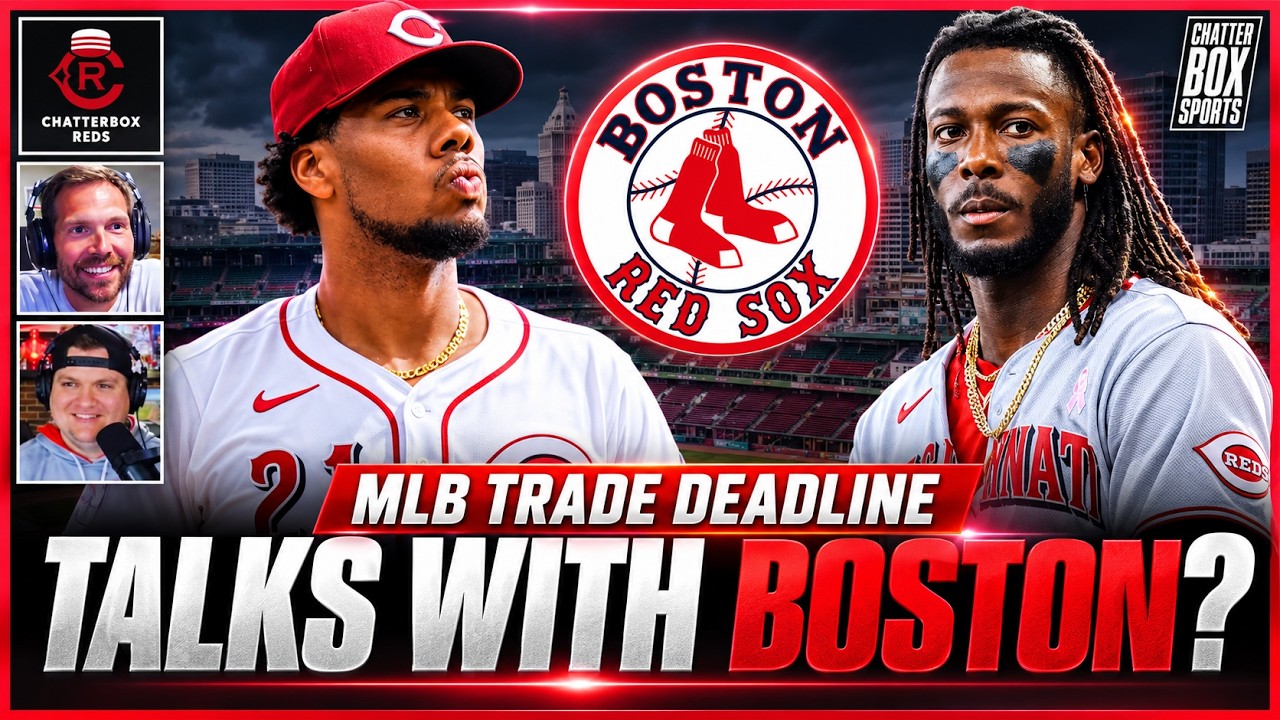
Nick Kirby and Trace Fowler discussed the latest MLB Trade Deadline rumors surround the Cincinnati Reds.
----------------------
Cincinnati Reds' Trade Deadline Signals Focus on the Future Despite Holding Onto Core Stars
The Cincinnati Reds entered the 2026 MLB Trade Deadline with one of the toughest decisions in baseball. After falling out of the National League playoff race following a disappointing second half of the season, the front office had to decide whether to make an aggressive push for the future or keep the roster largely intact in hopes of contending again in 2027.
In the end, the Reds chose a balanced approach.
While Cincinnati listened to offers on several veterans and moved pieces that were nearing free agency, the organization resisted the temptation to completely tear down the roster. Most notably, the Reds held onto franchise cornerstones Elly De La Cruz and Hunter Greene despite significant interest from multiple clubs.
Reports following the deadline revealed that the Boston Red Sox discussed a blockbuster trade package involving both De La Cruz and Greene. Although talks never reached the finish line, the discussions showed just how highly other organizations value Cincinnati's two biggest stars.
Keeping De La Cruz was hardly a surprise.
The dynamic shortstop remains one of the most electrifying players in Major League Baseball. His combination of elite speed, power, defensive ability and game-changing athleticism makes him nearly impossible to replace. Players with his talent rarely become available, and it would have taken an overwhelming offer for the Reds to seriously consider moving him.
The same can be said for Greene.
Despite dealing with injuries over the last two seasons, Greene continues to possess one of the highest ceilings of any starting pitcher in baseball. His elite fastball, improving secondary pitches and team-friendly contract make him an incredibly valuable asset. Even with reports that Cincinnati entertained conversations, the asking price clearly remained sky-high.
The willingness to listen on both players doesn't necessarily mean the Reds wanted to trade them. Instead, it reflects how front offices operate at the deadline. Every player has a price, and general managers routinely gauge the market to understand the value of their roster. For Cincinnati, no club presented an offer compelling enough to justify moving either franchise cornerstone.
Instead, the Reds focused on maximizing value elsewhere.
Veteran players approaching free agency naturally generated interest around the league, allowing Cincinnati to add prospect depth without sacrificing the organization's long-term core. That strategy keeps the farm system moving in the right direction while maintaining a foundation capable of competing in the National League Central next season.
The deadline also highlighted the difficult position the Reds found themselves in. Injuries played a major role throughout the season, preventing the club from establishing consistency. Key contributors spent significant time on the injured list, while several young players struggled to produce at the level many expected after last year's success.
Despite those setbacks, Cincinnati still believes its competitive window remains open.
The organization has invested heavily in young talent over the last several years, and many of those players are expected to remain central pieces moving forward. De La Cruz, Greene, Chase Burns, Matt McLain and several other young contributors give the Reds a foundation that many rebuilding clubs would envy.
There is also reason for optimism throughout the minor league system.
Several prospects have continued their development in 2026, giving the Reds additional depth and potential trade capital moving forward. A stronger farm system provides flexibility, whether the organization chooses to make offseason additions or pursue impact players at future trade deadlines.
Of course, holding onto stars also comes with pressure.
The Reds now need to show meaningful improvement this offseason. Ownership and the front office will face expectations to strengthen the roster through free agency, trades and internal development. Standing pat again could make it more difficult to convince fans that the club is serious about competing for a postseason berth.
For now, though, Cincinnati's message is clear.
The Reds were willing to listen, but they were not willing to sell low on elite talent. De La Cruz and Greene remain central to the organization's vision, and keeping both players signals that the front office still believes this group can compete sooner rather than later.
The 2026 Trade Deadline may ultimately be remembered less for the deals Cincinnati completed and more for the blockbuster conversations that never happened. While fans will undoubtedly wonder what Boston or other clubs were willing to offer, the Reds ultimately decided their future is brighter with their franchise